
Hawaii Inmate Records Structure
Hawaii is not built around county sheriff jail rosters in the usual mainland sense. The statewide custody anchor is the State of Hawaii Department of Corrections and Rehabilitation, or DCR. The research identifies DCR as the current official agency name and abbreviation, with older Public Safety branding left as historical context only. DCR runs Hawaii's community correctional centers and prisons, including the jail-equivalent centers for Hawaii Island, Kauai, Maui, and Oahu. That means a person held after a local arrest may move from a police booking or cellblock stage into a state-run correctional center rather than into a sheriff-operated county jail.
The DCR Correctional Institutions Division page shows the statewide jail, prison, and mainland-placement structure behind Hawaii inmate records.
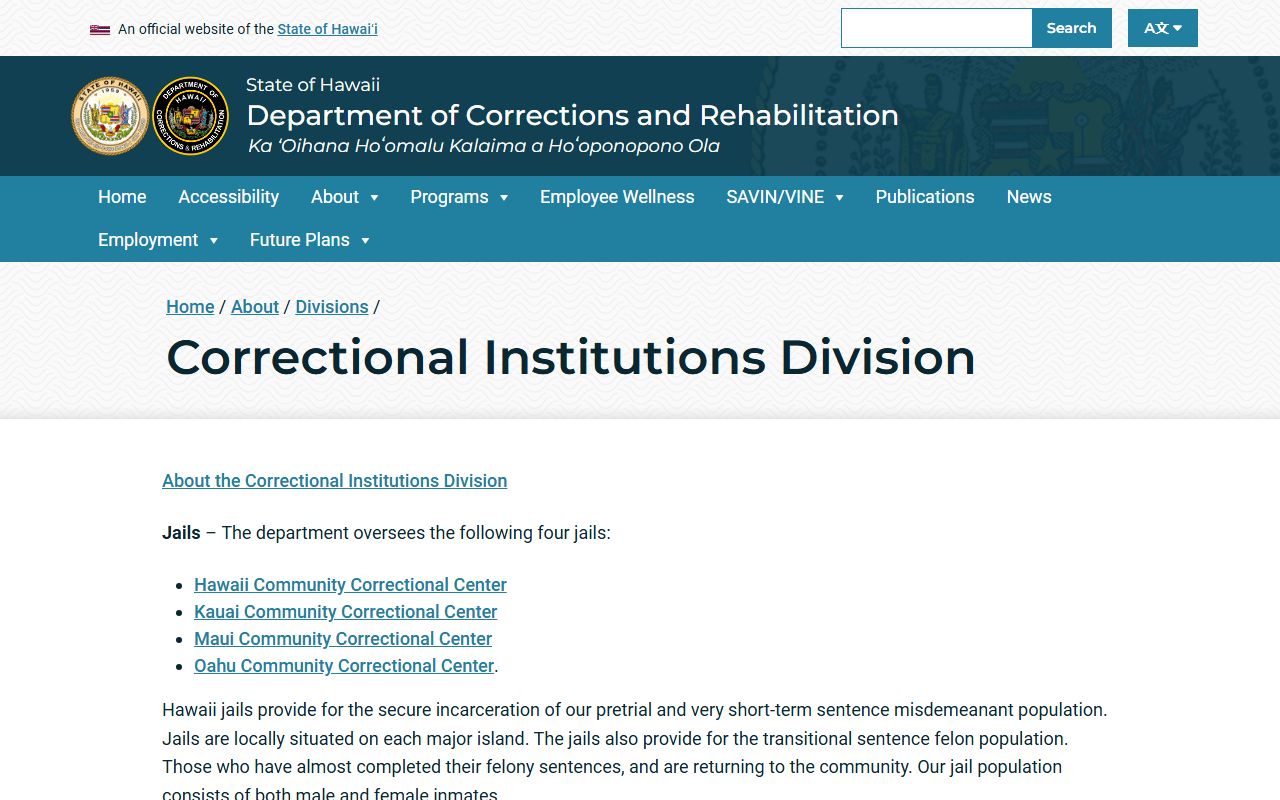
That agency structure is the reason Hawaii inmate records must be sorted by custody stage before choosing a search tool.
Police-stage records are separate from DCR custody. Hawaii Police Department publishes 48-hour charged-arrest booking logs and gives East Hawaii and West Hawaii cellblock routes for custody confirmation. Honolulu Police Department publishes adult arrest logs. Kauai research includes a Police Department Cell Block, and Maui research identifies the Receiving Desk at Wailuku Police Station as a local holding and booking route. These local records can matter before DCR custody or court filing is visible.
Search Hawaii DCR Custody
The main public search route for DCR custody and parole status is Hawaii SAVIN/VINELink. DCR describes Hawaii SAVIN as the Statewide Automated Victim Information and Notification service, powered by VINE, for offenders under DCR jurisdiction. It can be used by web, phone, mobile app, text, email, and TTY channels listed by DCR. It is a custody and parole-status route, not a complete criminal-history file and not a replacement for a court docket.
The Hawaii VINELink person-search portal is the statewide interface for DCR custody and parole status.
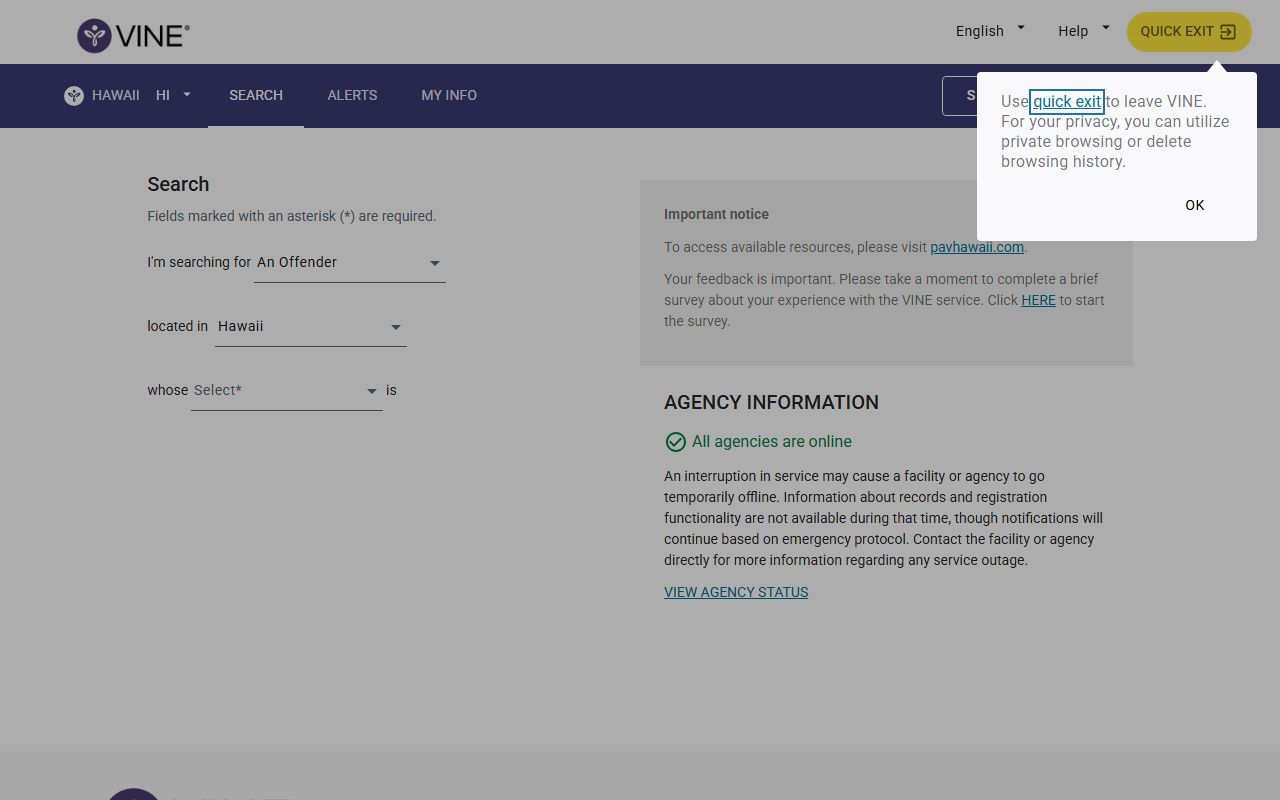
VINELink is the right first search when the person is likely in a DCR jail, prison, or parole-status record.
- Search Hawaii SAVIN/VINELink by name when DCR custody or parole status is the likely route.
- Check spelling variations because an official custody record may depend on how the name was entered.
- Use the facility name, if known, to confirm whether the person is in a DCR jail, a DCR prison, or a mainland DCR placement.
- Move to local police logs only when the arrest is too recent for DCR custody or court filing.
- Use eCourt Kokua for formal charges, events, dockets, and bail or bond fields after a case is filed.
Note: HPD research says SAVIN does not apply to suspects still held in a police cellblock before court processing.
Hawaii Lookup Channel Comparison
One person can touch more than one public-record system. A recent local arrest may begin with a police log. Continued confinement may shift to a DCR community correctional center. A filed criminal case may appear in eCourt Kokua. A federal case may route through BOP, U.S. Marshals, or federal court. Immigration custody is separate and uses ICE tools. Treating all of those systems as one Hawaii inmate record search creates false negatives.
| Record Need | Primary Hawaii Source | What It Can Confirm |
|---|---|---|
| DCR jail or prison custody | Hawaii SAVIN/VINELink | Custody or parole status for offenders under DCR jurisdiction |
| Recent police-stage booking | Local police booking logs or cellblock routes | Recent arrest or short-term police holding where the local source publishes it |
| Filed court case | Hawaii Judiciary eCourt Kokua | Case status, events, dockets, formal offenses, and bail/bond fields where available |
| Federal custody | BOP inmate locator | Federal inmate location and release-date fields for inmates from 1982 forward |
| Immigration custody | ICE Online Detainee Locator System | Current ICE custody and qualifying CBP custody described by ICE sources |
The Hawaii Judiciary eCourt Kokua information page documents the statewide court-record layer that becomes useful after filing.
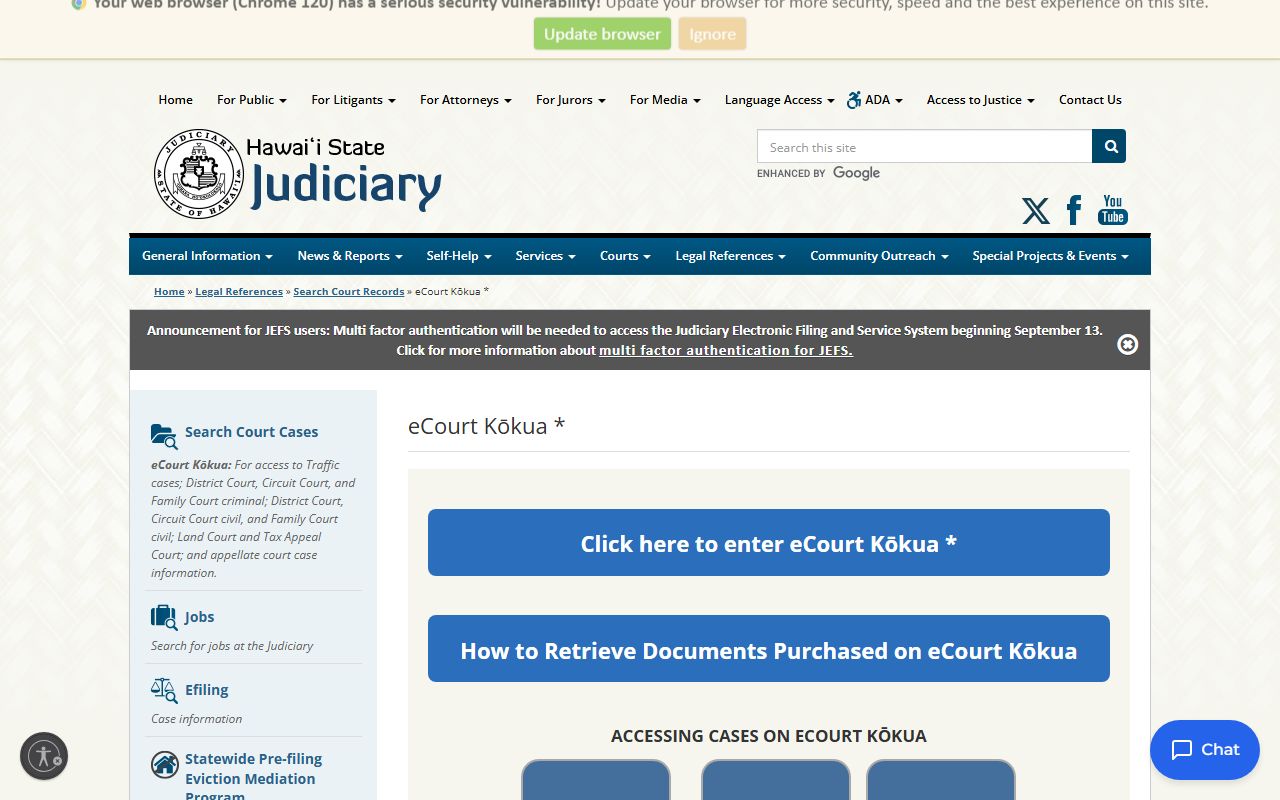
eCourt Kokua can explain charges and docket events, but it does not replace live DCR custody status or local police booking logs.
Hawaii Record Field Inventory
The research does not support promising one statewide profile with every inmate field. Hawaii inmate records are assembled from the source that owns each stage. DCR/SAVIN can show custody or parole status for DCR jurisdiction. Police booking logs can show recent local arrest details where the local department publishes them. eCourt Kokua can show the court case after filing, while BOP and ICE apply only to their own custody systems.
| Field | Best Supported Source | Important Limit |
|---|---|---|
| Name and custody/parole status | Hawaii SAVIN/VINELink | Applies to DCR jurisdiction, not police cellblocks, BOP, or ICE |
| Facility or correctional placement | DCR facility pages and SAVIN/VINELink | May include community correctional centers, prisons, or mainland placement |
| Recent booking or arrest log | Local police channels | Varies by locality and may cover only a recent police-stage window |
| Formal charges and docket events | eCourt Kokua | Starts after case filing and does not prove present custody |
| Federal location and release fields | BOP inmate locator | BOP cautions that release or not-in-custody status does not resolve all other systems |
| Immigration detention | ICE ODLS | ICE custody is not state criminal custody |
Police Booking Logs and Cellblocks
Hawaii inmate records often start before DCR can be the right source. The clearest researched example is Hawaii County. Hawaii Police Department's inmate-information and booking-log materials state that recent charged arrests can be checked through its 48-hour booking logs and that East Hawaii and West Hawaii cellblock contacts may confirm custody. The same research warns that VINELink does not apply to suspects in police cellblocks before court. That is a sharp statewide distinction.
Honolulu Police Department adult arrest logs provide a separate recent-arrest route for Oahu. Kauai Police Department Cell Block and Maui Police Department Receiving Desk / Wailuku Police Station show similar police-stage access points in the statewide roll-up. These are not substitutes for DCR custody records. They answer a narrower question: whether a very recent local arrest is still in the police booking or holding stage. The county directory is the natural route when the question is local and the arrest is recent.
Note: Kalawao research found no conventional county jail or county roster, so the statewide routing should not invent one.
Federal and ICE Records
Federal custody must be kept apart from Hawaii DCR custody. BOP operates the federal inmate locator for federal inmates incarcerated from 1982 to the present. The research lists search options by BOP register number, DCDC number, FBI number, INS number, or by name fields with race, age, and sex. The result fields identified in the research include name, register number, age, race, sex, release date, and location. Federal Detention Center Honolulu is the primary federal detention facility in Hawaii.
The BOP inmate locator is the federal source to use when Hawaii DCR and local police channels do not fit the custody stage.
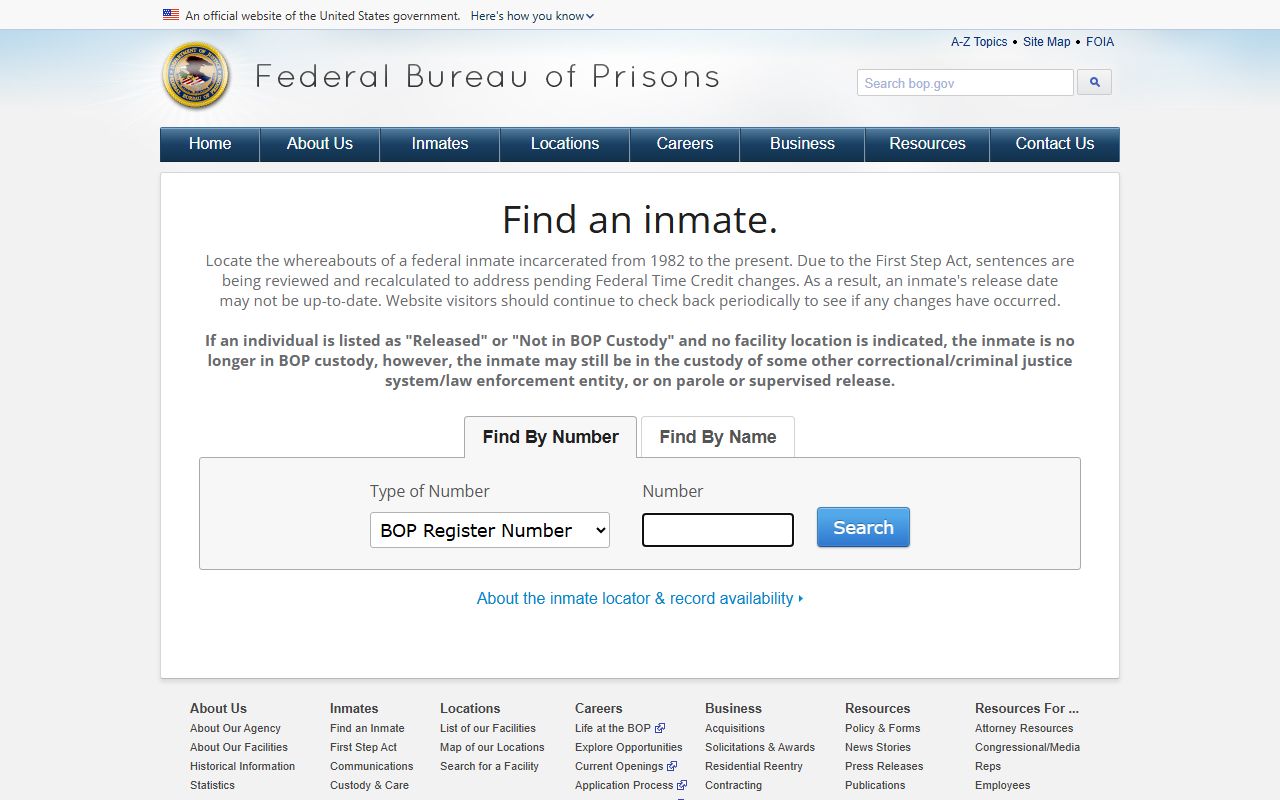
BOP records can be useful for a Hawaii-related federal case, but BOP does not cover DCR jails, DCR prisons, or ICE detention.
ICE custody is also separate. The research identifies the ICE Online Detainee Locator System and the ICE facility page for Federal Detention Center Honolulu. ICE search rules are different from DCR and BOP. The researched ODLS details include A-number and country-of-birth search requirements, exact biographical-search requirements, and a limit that it cannot search records for persons under 18. Immigration bond and removal proceedings do not use DCR parole or jail-release rules.
UIPA Requests for Hawaii Records
When a Hawaii inmate record is not available through a public search screen, the records request should go to the agency most likely to maintain it. Hawaii's public-record law is the Uniform Information Practices Act (Modified), HRS Chapter 92F, known as UIPA. The Office of Information Practices says requesters should identify the likely agency, send the request to that agency, describe the record, include contact information, and say whether they want inspection or copies. OIP also says the model request form goes to the agency holding the record, not to OIP unless the request is for OIP records.
The OIP public-record request page is the official source for Hawaii UIPA request routing and response guidance.
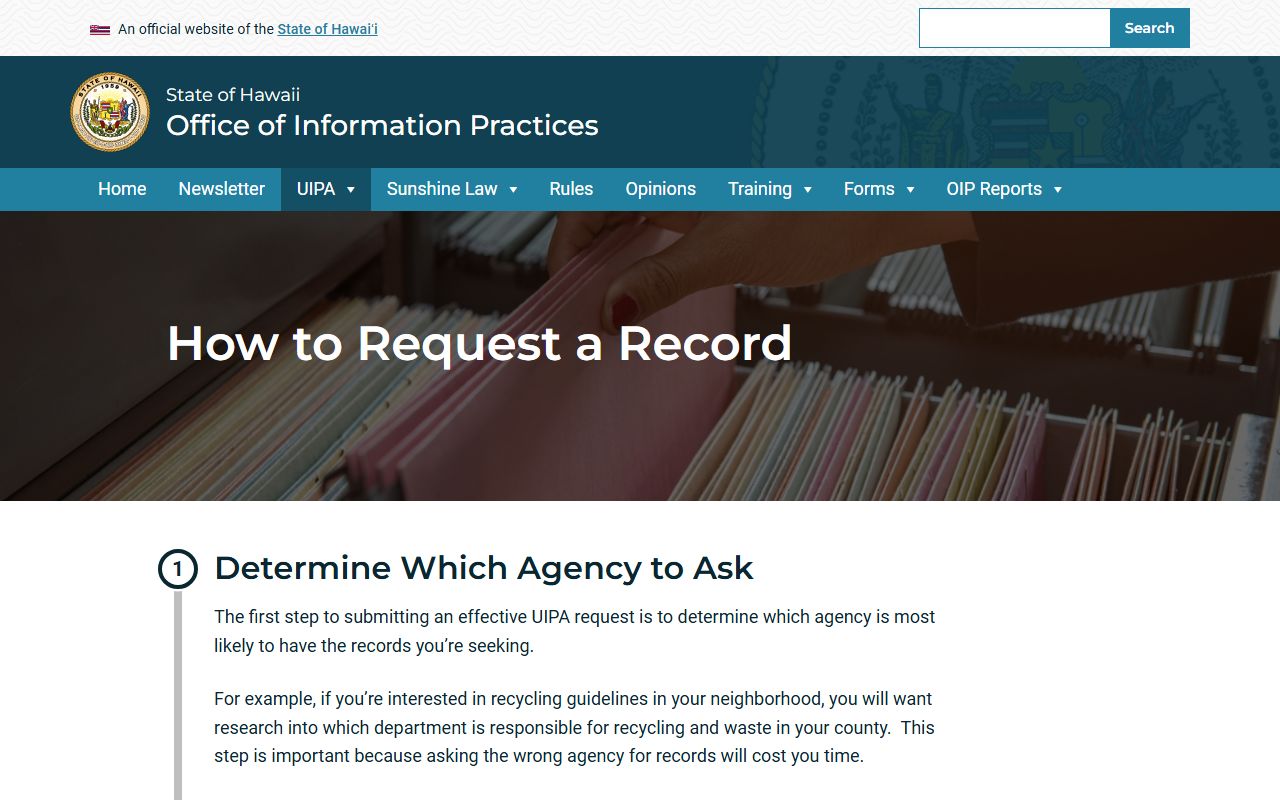
The practical effect is simple: DCR records go to DCR, police booking or incident records go to the local police agency, court records go through the Judiciary or courthouse, and federal records use federal routes rather than UIPA.
- Identify whether the requested record is a DCR custody, local police, court, BOP, ICE, or facility record.
- Send the request to the maintaining agency instead of sending every request to one statewide office.
- Describe the person, date range, facility, case, or record type with enough detail for staff to locate it.
- Ask for inspection or copies and provide contact information for follow-up.
- Use the facility directory when the facility name is known but the maintaining agency is unclear.
Note: UIPA can make directory information public without making medical, sealed, juvenile, safety, or investigative records public.
Hawaii Inmate Records Checklist
A sound Hawaii inmate records search follows custody status rather than geography alone. Start with DCR/SAVIN when the person may be in a community correctional center, prison, parole status, or mainland DCR placement. Use local police logs for recent arrests before DCR custody applies. Use eCourt Kokua after a case is filed. Use BOP for federal custody and ICE ODLS for immigration detention. Use UIPA only after identifying the agency that holds the record.
- DCR
- The State of Hawaii Department of Corrections and Rehabilitation, the statewide correctional agency for Hawaii jails and prisons.
- SAVIN/VINELink
- The DCR custody and parole notification route for offenders under DCR jurisdiction.
- Police cellblock
- A short-term local holding stage before court processing or DCR custody may apply.
- eCourt Kokua
- The statewide Hawaii Judiciary case lookup route for filed court records, not a jail roster.